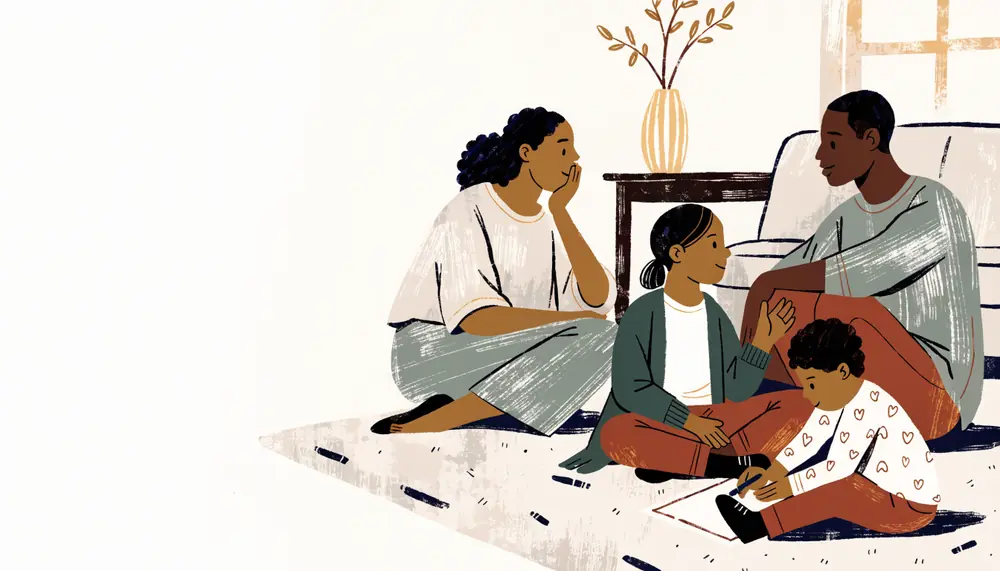
A positive starting pointWhat would positive parenting look like in our home?
When a rule is tested and you feel torn, lead with care and a clear limit. Hear the feeling. State what must happen. Help your child practice the next step.
What this could look like
Your child is upset when play ends. Say: "You wish we could keep playing. It is time to leave. You can hold my hand or walk beside me."
A step to try
Choose a rule you need at home. Write the words you will use before the next hard moment.
AAP: Discipline and clear limits (2018; age-specific guidance)
A positive starting pointWhich parenting habits do I want to keep or change?
When you regret a hard moment, name the action you want to keep and the action you want to change. Focus on what you can do next.
What this could look like
After a rushed morning: "I want to keep helping with shoes. I want to stop calling across the room. Tomorrow I will go over and give a clear next step."
A step to try
Write: I want to keep ___. Next time I will try ___.
Kingdom Blueprint reflection prompt
A positive starting pointWhat is one realistic skill I can practice this week?
When the week feels full, pick a small action you can try in a moment that happens often. Make the action clear enough to notice.
What this could look like
At cleanup, you feel worn out. Try: "The blocks go in this box." Help your child begin, then notice what they did.
A step to try
Choose the moment, the words and when you will look back at how it went.
UNICEF: Positive discipline (accessed 2026)
Listening & connectionHow can I listen before I correct?
When your child is upset and you want to correct them, hear what happened first. Say back what you heard. Then name the limit that still applies.
What this could look like
After a toy dispute: "You felt left out when the game started. Did I get that right? You can ask for a turn. Hitting is not allowed."
A step to try
Let your child finish. Check your guess about their feeling before giving advice.
CDC: Connecting and communicating (2026; toddlers and preschoolers)
Listening & connectionHow does my child communicate when words are difficult?
When words are hard and you feel unsure, offer a way to point, draw or show you. Do not assume you know what a gesture means.
What this could look like
At pickup, your child looks upset but is quiet. Say: "Would you like to show me, draw it, or talk later?" Give room for their answer.
A step to try
Use your child's usual way to communicate. Ask their care team about changes or concerns.
CDC: Connecting and communicating (2026; toddlers and preschoolers)
Listening & connectionHow can we build connection during an ordinary day?
When the day feels busy and you miss each other, join a small part of your child's day with your full attention. Let them show you what matters to them.
What this could look like
While folding clothes: "I have missed hearing about your day. Which part would you like to tell me about?" Put your phone aside and listen.
A step to try
Choose a routine you already share. Make room for a chat or quiet time together.
UNICEF: Positive discipline (accessed 2026)
Boundaries & consequencesHow can I state a clear, age-appropriate expectation?
When you feel frustrated by the same rule, say what to do in plain words. Match the task to what your child can do. Show the first step if needed.
What this could look like
At the door: "Shoes go on this mat." If your child looks lost, show the spot and help them start.
A step to try
Swap a broad phrase such as "Be good" for a clear action your child can see.
AAP: Discipline and clear limits (2018; age-specific guidance)
Boundaries & consequencesWhat consequence teaches the skill without shaming?
When a rule is broken and you feel angry, use a calm, related limit you can follow through on. Teach what to try next. Keep food, care and affection available.
What this could look like
Markers go on the wall. Say: "Markers are for paper. We will put these away for now. I will help you clean this spot, then we can try paper together."
A step to try
Explain the limit before play. Avoid pain, threats or shame as the lesson.
AAP: Discipline and clear limits (2018; age-specific guidance)
Boundaries & consequencesHow can caregivers follow through consistently?
When adults disagree and the child feels caught, talk privately about the rule and what happens next. Make a plan each caregiver can carry out.
What this could look like
Bedtime rules differ. Agree: "After the story, the screen stays off." Tell your child the shared plan at a calm time.
A step to try
Write the rule together. If a plan is not workable, revise it together rather than arguing through the child.
UNICEF: Positive discipline (accessed 2026)
My responses & repairWhat do I notice before I lose my patience?
When a hard moment starts, notice what is happening in you. You might feel tense, rushed or ready to shout. Choose a pause that keeps your child cared for.
What this could look like
During a loud morning: "I feel wound up. I am taking a breath before I speak." Stay present, or ask another trusted caregiver to help.
A step to try
Name your early sign and the words you want to use when it appears.
Kingdom Blueprint reflection prompt
My responses & repairHow do I apologize while keeping a needed boundary?
When you feel sorry after shouting, own your action. Keep the apology clear. You can still hold the rule while changing how you say it.
What this could look like
After cleanup: "I shouted. I am sorry. I will try a calm voice. The toys still need to go in the box. Let us start here."
A step to try
Name your part without adding "but you made me." Say what you will try next.
AAP: Discipline and clear limits (2018; age-specific guidance)
My responses & repairWhich label or repeated phrase do I want to replace?
When you feel annoyed and a label comes to mind, describe what happened instead. Ask for the next action, not a change to who your child is.
What this could look like
At a spill, replace "You are so careless" with: "The cup tipped. Let us get a cloth."
A step to try
Write down a phrase you want to retire and a kinder, clear phrase to practice.
Kingdom Blueprint reflection prompt
Faith & family patternsHow can I invite faith without making it a performance?
When faith time feels tense, invite an honest response. Keep space for a question, quiet listening or a pass. This is a family reflection, not a test of belief.
What this could look like
At bedtime: "Would you like to pray, listen, or share a question?" If your child passes, say: "Thank you for telling me."
A step to try
Choose a calm moment. Bring your own faith questions to an adult you trust.
Kingdom Blueprint reflection prompt
Faith & family patternsWhich family pattern do I want to respond to differently?
When an old family pattern leaves you sad or tense, name the moment and your next choice. Work on your response without asking your child to carry your past.
What this could look like
When tears remind you of being dismissed: "I can hear that you are upset. You do not have to hide it from me."
A step to try
Write the moment you want to handle differently and the support you want from your coach.
Kingdom Blueprint reflection prompt
Faith & family patternsWhat adult reflection do I need to take to my coach?
When a memory feels heavy after a family conflict, save the deeper story for adult support. Your child does not need to solve it or comfort you through it.
What this could look like
For your coach: "When I hear no, I feel rejected. I want help holding a calm limit." For your child: "The rule stays, and I can say it kindly."
A step to try
Bring a brief note about your response. Leave out private details you do not want stored on this device.
Kingdom Blueprint reflection prompt
Our coaching prioritiesWould parents-only or parent-and-child sessions fit us best?
When you feel unsure about a shared session, start with your coach. Describe the question, your child's needs and whether they want to join. Agree on the format first.
What this could look like
Before a call: "I want help with how I respond at bedtime. Can we start with just me, then discuss whether a family session would fit?"
A step to try
Use the free consultation to ask about fit. A child does not need to attend every call.
Kingdom Blueprint reflection prompt
Our coaching prioritiesWhat would meaningful progress look like for our family?
When progress feels vague, name a change you can notice in your own actions. Review what happened without grading your child or promising a perfect week.
What this could look like
After a tough evening: "I heard the whole story before I set the limit." Or: "I shouted, then came back and owned my part."
A step to try
Keep a brief note: what I tried, what happened and what I want help with next.
Kingdom Blueprint reflection prompt
Our coaching prioritiesWhich three questions should we bring to our next session?
When many questions feel urgent, start with the moment that keeps coming up. Add the response you want to practice and the point where you get stuck.
What this could look like
Your call note could say: "Bedtime leaves me tense. I want a clear rule. I need help following through without a long argument."
A step to try
Use this guide to pick your starting point. The rest can wait for a later conversation.
Kingdom Blueprint reflection prompt
 Kingdom Blueprint